

Distributed P2P Network
Revolutionizing Connectivity: Exploring the World of Distributed Peer-to-Peer Networks

A Distributed Peer-to-Peer (P2P) Network is a type of network architecture where participants in the network (nodes) share resources, data, or services directly with one another without the need for a centralized authority or server. In a distributed P2P network, each node in the network has equal status and can act both as a client and a server. Here are the key characteristics and features of distributed P2P networks:
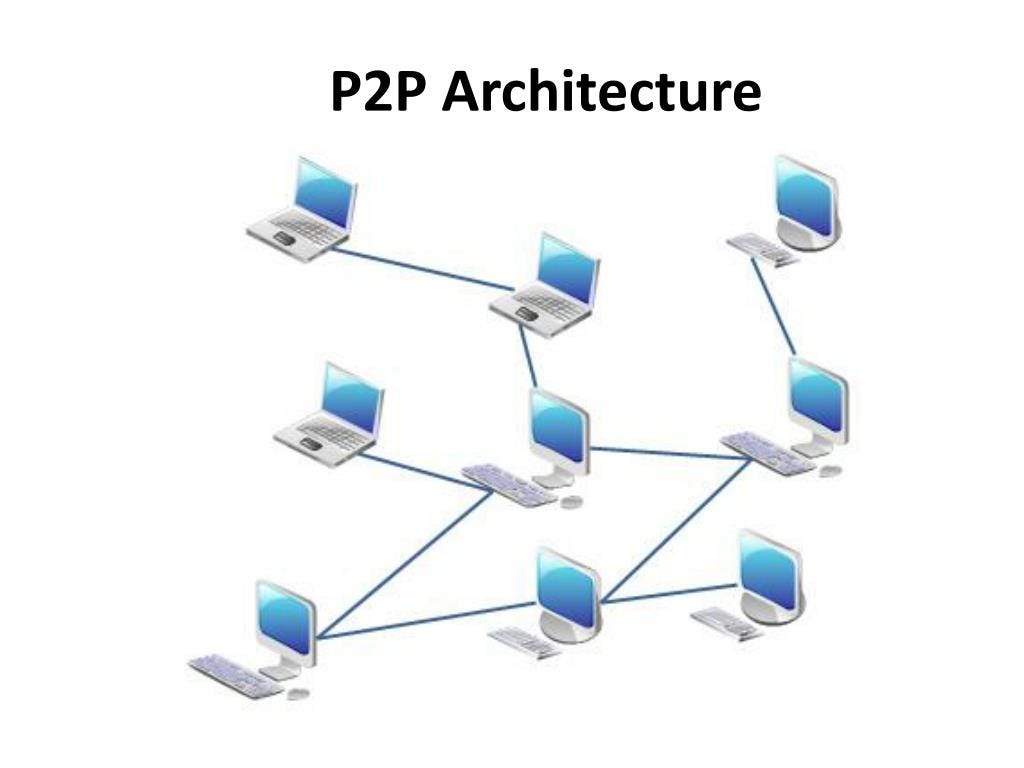
Decentralization: Distributed P2P networks lack a central server or authority. Instead, all nodes in the network have equal status and can communicate directly with each other. This decentralization is a fundamental aspect that distinguishes P2P networks from traditional client-server architectures.
Resource Sharing: Participants in a P2P network can share various resources, including files, computing power, bandwidth, or even services. This resource sharing is often a core function of P2P networks and enables efficient distribution of data and services across the network.
Autonomy: Each node in a distributed P2P network operates autonomously, making decisions independently. This autonomy contributes to the network's robustness and resilience because it doesn't rely on a single point of control.
Redundancy: P2P networks can be highly redundant because data or resources are often distributed across multiple nodes. This redundancy can enhance fault tolerance and ensure that data remains accessible even if some nodes fail.
Scalability: Distributed P2P networks can scale easily by adding more nodes to the network. As more participants join, the network's capacity and capabilities can increase without the need for significant central infrastructure.
Data Distribution: P2P networks are commonly used for efficient data distribution. Popular examples include BitTorrent for file sharing and content delivery networks (CDNs) that use P2P technology to distribute web content.
Security and Privacy: P2P networks can offer enhanced security and privacy because they don't rely on a single central point that can be targeted by attackers. However, they also present unique security challenges, such as the risk of malicious nodes.
Use Cases: Distributed P2P networks are employed in various applications, including file sharing, decentralized cryptocurrencies like Bitcoin, communication systems like Skype (in its earlier versions), and even distributed computing projects like SETI@home.
Challenges: P2P networks face challenges related to scalability, routing efficiency, security against malicious nodes, and ensuring that participants contribute fairly to the network without free-riding.
Hybrid Models: Some networks combine P2P with other architectures. For example, blockchain networks are often considered a hybrid of P2P and distributed ledger technologies, where nodes both participate in the network and maintain a copy of the ledger.
In summary, a distributed P2P network is a network architecture where peers communicate and share resources directly with one another, without relying on a centralized server or authority. This decentralized approach offers benefits in terms of scalability, redundancy, and resilience but also presents challenges related to security and efficiency. P2P networks have found applications in a wide range of fields and continue to evolve with advances in technology.